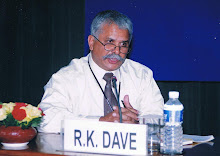
Increased sensitivity to terrorism has changed vulnerability map of each state in India, specifically Gujarat, Maharastra, Andhra, Tamilnadu, Kerala, Orissa and Goa. These states already have undue share of natural hazards and suffered maximum compared to any other state in India.
The current situation demands extensive intelligence information on “suspected elements” from every where in the state as a “preventive measure”. Although state and central agencies has their intelligence gathering system, but such systems suffers from physical limitation and can not cover each and every corner of state geography. We need to cover one and all at this point for identification and early interception of unwanted.
As a patriotic citizen and knowledge expert clandestine operations, (physical safety, security and emergency management) – I consider it my duty and feel obliged to submit my thoughts and perception of the current situation, as given below.
Each State should announce / notify state wide “Neighborhood watch”
Involving “community” is the only way for gathering information from each street in any city / town and I submit that – state wide announcement / notification should be made requesting one and all to start “neighborhood watch” and report unusual activity / movement of unknown person in their respective area to the “District fusion center” on given numbers.
In addition to radio and TV announcement for “neighborhood watch” – posters should also be pasted in street corners for “neighborhood watch” and instructions.
Establish “District Fusion center”
All district police control should also work as “district fusion center” with a toll free number or even they can use exiting number 100 for reporting unusual activity or person seen in neighborhood. Based on the size and complexity of district geography – the competent authority may plan and establish a “validation mechanism (intelligence acquisition, analysis, decision and dissemination)” for all incoming calls.
The “State fusion center’ at capital HQ should get all incoming calls through a mirrored recording system from all district. The state fusion center should also have “hot line (no dialing)” connection with the districts fusion centers.
Enforce “enhanced check post surveillance”
Strict boarder securities and surveillance is the first step for intercepting unwanted elements early. Check post surveillance is easy to enforce and manage and perhaps the nest way to ensure safety and security of people and property in the state. My suggestion would be that – video surveillance system with programmed analytic application be installed at all strategic points connected with district fusion centers.
This is important that effective information validation mechanism is planned and put in place so as people can be cleared quickly at entry points and do not feel harassed. State wide – “Neighborhood watch program” will not only enhance and improve overall resiliency of the state, but will provide an opportunity to common man to inculcate much needed awareness on the subject of terrorism.
Best regards.
Sunday, September 25, 2011


Tuesday, August 16, 2011
State Wide Area Network (SWAN) vs State Emergency Response Management ICT Networks
SWAN BACKGROUND:
State Wide Area Network (SWAN) has been identified as one of the Mission Mode Projects under the National e-Governance Plan by Department of Information Technology, Govt. of India (DIT, GoI) to increase transparency, efficient and effectiveness for delivery of citizen services.
Under the central guidelines State Wide Area Network (SWAN) is to be designed to works on the PSTN leased circuits for vertical / horizontal connectivity at State HQ, District HQ and Taluka HQ level. DIT, GOI, support will cover the entire cost of establishment, operation and maintenance of the SWAN for a period of five years on 100% grant basis. The State Wide Area Network (SWAN), under the policy announced by Government of India, are implemented on PPP model (BOO, BOOT etc.) by selecting an appropriate agency through a suitable competitive process for outsourcing establishment, operation and maintenance of the Network under appropriate SLA (service Level Agreement).
SLA typically guarantee availability as the percentage of time a circuit or a link is up over a specified time period. If the SLA specifies 99 % uptime averaged over a month, for instance, circuit or link can be down for seven hours before the service provider can be accused of SLA non compliance.
Typically Sate WAN – SLA allows network outages during natural and other disasters. Events of Force Majeure defined in the State Wide Area Network SLA generally include:
(i) Blockade, Revolution, Riot, Bombs, Religious strife or Civil commotion;
(ii) Strikes, lock-outs or other industrial action (other than those involving
primarily Service Provider’s own employees or any of the contractors, sub-contractors, etc. directly associated with the provision of Services under this Agreement)
(iii) Act of war (whether declared or undeclared), terrorist or military action,
politically motivated sabotage;
(iv) A decision or the order of a court or tribunal, which has the effect of
restraining or delaying the provision of Services;
(v) Explosions, accident, breakage of facilities, plant or equipment, structural
collapse, fire chemical or radio active contamination (other than resulting from an act of war, terrorism or sabotage), caused by a person not being the affected Party or one of its contractors or sub-contractors, sub-lessees or any other agencies of the affected Party or any of their respective employees, and not being due to inherent defects of the affected facility of the failure to properly operate the affected facility;
(vi) Fire, lightening, earthquake, tempest, cyclone, hurricane, whirlwind, flood,
landslide or any such natural disaster;
(vii) Epidemic or plague;
(viii) Any event or circumstance of a nature analogous to any of the above or any natural disaster.
The State Wide Area Network design allows service disruptions during above exceptional emergencies or events. Design criteria for disaster response communication network are absolutely different from the criteria adopted for SWAN design as “continuous availability of communication channels” is more crucial during Force Majeure conditions then that of normal or study state situation.
ICT INFRASTRUCTURES FOR EMERGENCY RESPONSE MANAGEMENT:
The basic necessarily for effective functioning of network of EOCs – is the robust and fail safe communication network which can sustain blows of sever incidents and in case of outages can be turned around in bare minimum time. These networks are immune to disasters. In addition – portability should be inherent character of the emergency response communication system. PSTN: The weakness and vulnerabilities of Public switched terrestrial mobile and broad band networks, faced with disaster, have been reveled in natural and man made crises.
PSTN backbones are designed to work under normal circumstances and fails with even minor environmental stress – viz- prolonged power outages, water flooding or fire. SWAN: State WAN works on PSTN backbone and hence are equally vulnerable to sever incidents. SWAN is designed to work during normal conditions and such designs are not resilient to disasters due to economic and other considerations. In addition the existing SWAN design does not offers “assured portability in WAN environment”. These networks can be used for day-to-day operations by the emergency management agencies but can not be relied for their usages during emergency response.
ICT NETWORK FOR DISASTER MANAGEMENT:
State Disaster management agencies, thus, would need to plan, design and establish satellite based WAN meeting - portability, reliability, scalability criteria which are crucial to emergency and disaster response management. Both – existing state wide area networks and the satellite based state emergency response communication network would be cascaded bringing synergies into system.
Development of State Network of Emergency Operation Center (EOCs) is mandated under national disaster Response guidelines - Incident Response system notified by National Disaster Management Authority in July 2010. State EOC is a secured physical facility to accommodate all line departments with specific role during emergencies, with fail safe local and wide area communication connectivity, impact analysis and decision support system. EOC’s are off-site facilities for situation assessment /analysis coordination and collaboration of resources in most effective and efficient possible and are to be connected with both existing SWAN and the Satellite based emergency response communication network. Emerging composition of EOC’s also integrates - Intelligent decision support system (DSS) – viz- Incident Management Application, simulation models into overall disaster management ICT infrastructure design.
State Wide Area Network (SWAN) has been identified as one of the Mission Mode Projects under the National e-Governance Plan by Department of Information Technology, Govt. of India (DIT, GoI) to increase transparency, efficient and effectiveness for delivery of citizen services.
Under the central guidelines State Wide Area Network (SWAN) is to be designed to works on the PSTN leased circuits for vertical / horizontal connectivity at State HQ, District HQ and Taluka HQ level. DIT, GOI, support will cover the entire cost of establishment, operation and maintenance of the SWAN for a period of five years on 100% grant basis. The State Wide Area Network (SWAN), under the policy announced by Government of India, are implemented on PPP model (BOO, BOOT etc.) by selecting an appropriate agency through a suitable competitive process for outsourcing establishment, operation and maintenance of the Network under appropriate SLA (service Level Agreement).
SLA typically guarantee availability as the percentage of time a circuit or a link is up over a specified time period. If the SLA specifies 99 % uptime averaged over a month, for instance, circuit or link can be down for seven hours before the service provider can be accused of SLA non compliance.
Typically Sate WAN – SLA allows network outages during natural and other disasters. Events of Force Majeure defined in the State Wide Area Network SLA generally include:
(i) Blockade, Revolution, Riot, Bombs, Religious strife or Civil commotion;
(ii) Strikes, lock-outs or other industrial action (other than those involving
primarily Service Provider’s own employees or any of the contractors, sub-contractors, etc. directly associated with the provision of Services under this Agreement)
(iii) Act of war (whether declared or undeclared), terrorist or military action,
politically motivated sabotage;
(iv) A decision or the order of a court or tribunal, which has the effect of
restraining or delaying the provision of Services;
(v) Explosions, accident, breakage of facilities, plant or equipment, structural
collapse, fire chemical or radio active contamination (other than resulting from an act of war, terrorism or sabotage), caused by a person not being the affected Party or one of its contractors or sub-contractors, sub-lessees or any other agencies of the affected Party or any of their respective employees, and not being due to inherent defects of the affected facility of the failure to properly operate the affected facility;
(vi) Fire, lightening, earthquake, tempest, cyclone, hurricane, whirlwind, flood,
landslide or any such natural disaster;
(vii) Epidemic or plague;
(viii) Any event or circumstance of a nature analogous to any of the above or any natural disaster.
The State Wide Area Network design allows service disruptions during above exceptional emergencies or events. Design criteria for disaster response communication network are absolutely different from the criteria adopted for SWAN design as “continuous availability of communication channels” is more crucial during Force Majeure conditions then that of normal or study state situation.
ICT INFRASTRUCTURES FOR EMERGENCY RESPONSE MANAGEMENT:
The basic necessarily for effective functioning of network of EOCs – is the robust and fail safe communication network which can sustain blows of sever incidents and in case of outages can be turned around in bare minimum time. These networks are immune to disasters. In addition – portability should be inherent character of the emergency response communication system. PSTN: The weakness and vulnerabilities of Public switched terrestrial mobile and broad band networks, faced with disaster, have been reveled in natural and man made crises.
PSTN backbones are designed to work under normal circumstances and fails with even minor environmental stress – viz- prolonged power outages, water flooding or fire. SWAN: State WAN works on PSTN backbone and hence are equally vulnerable to sever incidents. SWAN is designed to work during normal conditions and such designs are not resilient to disasters due to economic and other considerations. In addition the existing SWAN design does not offers “assured portability in WAN environment”. These networks can be used for day-to-day operations by the emergency management agencies but can not be relied for their usages during emergency response.
ICT NETWORK FOR DISASTER MANAGEMENT:
State Disaster management agencies, thus, would need to plan, design and establish satellite based WAN meeting - portability, reliability, scalability criteria which are crucial to emergency and disaster response management. Both – existing state wide area networks and the satellite based state emergency response communication network would be cascaded bringing synergies into system.
Development of State Network of Emergency Operation Center (EOCs) is mandated under national disaster Response guidelines - Incident Response system notified by National Disaster Management Authority in July 2010. State EOC is a secured physical facility to accommodate all line departments with specific role during emergencies, with fail safe local and wide area communication connectivity, impact analysis and decision support system. EOC’s are off-site facilities for situation assessment /analysis coordination and collaboration of resources in most effective and efficient possible and are to be connected with both existing SWAN and the Satellite based emergency response communication network. Emerging composition of EOC’s also integrates - Intelligent decision support system (DSS) – viz- Incident Management Application, simulation models into overall disaster management ICT infrastructure design.
Wednesday, March 30, 2011
Japan - An example of Most "Resilient Selfless Society"
No amount of “material preparedness” works during the extreme incident. Backup(s) communication, power generators or storage of emergency inventories are good in pre-disaster senerio. Everything will stop working at the site of incident after impact, even with hundreds of cascaded and co-located redundancies !
Support has to flow-in from the nearest unaffected locations. There are numerous lesions attesting and re-attesting several of the critical “preparedness issues” but unfortunately learning’s are not proportional.
The first and most critical factor in the equation of “resilience” is the “human factor”. “Selfless attitude” and ability to understand and act on receiving “alerts and warning” are major contributors in saving lives and property. Finding of my research attests “increase in selfishness increases with severity of incident and environmental stresses”.
Increased “selfishness” during crisis impacts emergency response management adversely where as “endurance and cooperative attitude” is extremely helpful in restoring the situation. You have pointed out very important “character” of “resilient society” . But this need to be highlighted and presented in many ways all through the world, specifically in the vulnerable countries, that “resilience” starts with “selflessness”.
The first responder in any situation is the person next to you and that is why – ability to understand alert/warning and attitude to react in a selfless manner is more crucial then a high-tech support reaching to you after a laps of one hour.
I congratulate all Japanes for their endurance and selflessness and wish them a quick recovery.
Support has to flow-in from the nearest unaffected locations. There are numerous lesions attesting and re-attesting several of the critical “preparedness issues” but unfortunately learning’s are not proportional.
The first and most critical factor in the equation of “resilience” is the “human factor”. “Selfless attitude” and ability to understand and act on receiving “alerts and warning” are major contributors in saving lives and property. Finding of my research attests “increase in selfishness increases with severity of incident and environmental stresses”.
Increased “selfishness” during crisis impacts emergency response management adversely where as “endurance and cooperative attitude” is extremely helpful in restoring the situation. You have pointed out very important “character” of “resilient society” . But this need to be highlighted and presented in many ways all through the world, specifically in the vulnerable countries, that “resilience” starts with “selflessness”.
The first responder in any situation is the person next to you and that is why – ability to understand alert/warning and attitude to react in a selfless manner is more crucial then a high-tech support reaching to you after a laps of one hour.
I congratulate all Japanes for their endurance and selflessness and wish them a quick recovery.
Monday, March 14, 2011
Tsunami Management in India

Managing Tsunami in India - By Dr R K Dave
Tsunamis consist of a series of very long waves generated by any rapid, large-scale disturbance of the sea. Most are generated by sea floor displacements from large undersea earthquakes. Tsunamis can cause great destruction and loss of lives within minutes on shores near the source, and some tsunamis can cause destruction within hours across an entire ocean basin.
Most tsunamis occur in the Pacific region but they are known to happen in every ocean and sea. Although infrequent, tsunamis are a significant natural hazard with great destructive potential. They can only be dealt with effectively through efficient detection, monitoring, measuring system cascaded with alert and warning, mitigation, and education.
Tsunamis consist of a series of very long waves generated by any rapid, large-scale disturbance of the sea. Most are generated by sea floor displacements from large undersea earthquakes. Tsunamis can cause great destruction and loss of lives within minutes on shores near the source, and some tsunamis can cause destruction within hours across an entire ocean basin.
Most tsunamis occur in the Pacific region but they are known to happen in every ocean and sea. Although infrequent, tsunamis are a significant natural hazard with great destructive potential. They can only be dealt with effectively through efficient detection, monitoring, measuring system cascaded with alert and warning, mitigation, and education.
Deep Ocean Assessment and Reporting of Tsunamis (DART) system is commonly used for monitoring and measuring Tsunamis. DART system consists of an anchored seafloor bottom pressure transducer and a companion moored surface buoy for real-time communications.
A powerful acoustic radio modem transmits data from the submerged platform to the surface buoy. The data are then relayed via Inmarsat-C satellite link to Land stations, which forward the signals for immediate dissemination to Warning Centers. There are 32 sensor buoys in the Pacific working round the clock. Each deep sea station is designed to detect and report tsunamis on its own, without instructions from land.
A powerful acoustic radio modem transmits data from the submerged platform to the surface buoy. The data are then relayed via Inmarsat-C satellite link to Land stations, which forward the signals for immediate dissemination to Warning Centers. There are 32 sensor buoys in the Pacific working round the clock. Each deep sea station is designed to detect and report tsunamis on its own, without instructions from land.
Monitoring deep ocean earthquakes using modern technology tsunameter and conveying it to Tsunami warning center is not enough. For saving lives and property – the Tsunami alert must reach to the people along with required support in identified risk zone as quickly as possible so as they can take shelter at high altitude locations.
National EOC, State EOC and District EOC play a crucial role in the in-land management of Tsunami warnings. National network of EOC(s) connected with remotely manageable national grid of coastal area alert and warning system is the only way for in-land management of such hazards. RESPECT(WWW.respect.org.in) has recently organized a National Conference on EOC & Disaster Response Operation.
Thursday, March 10, 2011
EOC and Disaster Response Operations
Recommendations /outcome of EOC and Disaster Response Operations Conference held on14-15th Feb 2011, at the initiatives of RESPECT (Renewing and Empowering Society’s Progress & Enhancing capacities Through Technologies) an NGO in knowledge collaboration with Illinois Fire Service Institute (IFSI), USA
Conference Objectives: “EOC & Disaster Response Operation” Conference was an attempt to sensitize administration and emergency management practitioners on issues relating to Design, Functional, operational and management aspects of Emergency Operation Center (EOC), connectivity with Incident Command Systems and the Global best practices.
Recommendations
Two days extensive deliberation during the conference were focused on
Day – 1
Seven Critical Capabilities required (1.Pre-event Intelligence Fusion and Information Exchange, 2. Adequate Staffing, 3. Knowledge, 4. Detection, 5. Unified Incident Command & Communications, 6. Specialized Equipment and 7. Inter-agency Response) for enabling Effective Disaster Mitigation, Planning, Response and Recovery considering Seven critical threat i.e. Human+ BNICE+ Cyber: (1) Human threat, (2) Biological, (3) Nuclear / radiological, (4) Incendiary, (5) Chemical, (6) Explosive, and (7) Cyber against information and data systems. At least seven elements were distilled from summit discussions as essential for first responders to operate effectively and safely against these seven threats at a catastrophic hazardous event.
Day-2 EOC facility design, operation and management considerations.
Summery of the recommendations emerged out of discussion deliberation are as given below, marked with the attention of concerning agency below each.
General recommendation
1. Need for a consistent State-level statutory framework for implementation of the National Disaster Response System (NDRS). (Applies to National, State levels)
2. Need for consistent training and education for key disaster responders. (Applies to National, State, province, local and first responder agency levels)
3. Need to develop and implement programs that will help make citizens an effective part of the NDRS at the local level. (Applies to National, State, province, local and first responder agency
levels)
4. Need an established mechanism for dynamic validation, maintenance and sharing of emergency response Plans and resource databases .(Applies to National, State, province, local and first responder agency levels)
5. Need to design and establish an EOC and disaster response system performance audit to identify strength and weaknesses on regular basis. (Applies to State, province, local and first responder agency levels)
6. There needs to design and establish a “national system of disaster response Lessons Learned and Best Practices” which is accessible to administrations and responders at all levels. This will also provide the basis for responder training and education through the country. (Applies to National, State, province, local and first responder agency levels)
7. Need to plan, design and establish Integeration mechanism for linking national and state disaster intelligence fusion centers and enable local and province responders access to and communications reporting to them. (Applies to National, State, province, local and first responder agency levels)
8. Need to plan, design and establish a system to integrate Local, State, District, and Federal plans dynamically. (Applies to National, State, province, local and first responder agency levels)
9. Need to plan and establish a mechanism which will enable mandatory participation of Key officials and decision-makers in pre-event training, planning and exercises. (Applies to National, State, province, local and first responder agency levels)
10. Need for planning and establishing a training mechanism for Emergency responder’s n the use of The Indian Disaster Resource Network (IDRN), state disaster resource networks and other relevant disaster response support systems. (Applies to National, State, province, local and first responder agency levels)
11. Need to plan, design and establish a CIKR (critical infrastructures and key resources) directory with adequate monitoring system in place. The CIKR director may include -
Protecting and ensuring the resilience of the National critical infrastructure and key resources (CIKR) is essential to the nation’s security, public health and safety, economic vitality and the way of life. India, urgently, needs a national policy program for preventing, deterring, neutralizing, or mitigating the effects of deliberate efforts by terrorist to destroy, incapacitate, or exploit elements of our Nation’s CIKR. (Applies to National, State, province levels)
Conference Objectives: “EOC & Disaster Response Operation” Conference was an attempt to sensitize administration and emergency management practitioners on issues relating to Design, Functional, operational and management aspects of Emergency Operation Center (EOC), connectivity with Incident Command Systems and the Global best practices.
Recommendations
Two days extensive deliberation during the conference were focused on
Day – 1
Seven Critical Capabilities required (1.Pre-event Intelligence Fusion and Information Exchange, 2. Adequate Staffing, 3. Knowledge, 4. Detection, 5. Unified Incident Command & Communications, 6. Specialized Equipment and 7. Inter-agency Response) for enabling Effective Disaster Mitigation, Planning, Response and Recovery considering Seven critical threat i.e. Human+ BNICE+ Cyber: (1) Human threat, (2) Biological, (3) Nuclear / radiological, (4) Incendiary, (5) Chemical, (6) Explosive, and (7) Cyber against information and data systems. At least seven elements were distilled from summit discussions as essential for first responders to operate effectively and safely against these seven threats at a catastrophic hazardous event.
Day-2 EOC facility design, operation and management considerations.
Summery of the recommendations emerged out of discussion deliberation are as given below, marked with the attention of concerning agency below each.
General recommendation
1. Need for a consistent State-level statutory framework for implementation of the National Disaster Response System (NDRS). (Applies to National, State levels)
2. Need for consistent training and education for key disaster responders. (Applies to National, State, province, local and first responder agency levels)
3. Need to develop and implement programs that will help make citizens an effective part of the NDRS at the local level. (Applies to National, State, province, local and first responder agency
levels)
4. Need an established mechanism for dynamic validation, maintenance and sharing of emergency response Plans and resource databases .(Applies to National, State, province, local and first responder agency levels)
5. Need to design and establish an EOC and disaster response system performance audit to identify strength and weaknesses on regular basis. (Applies to State, province, local and first responder agency levels)
6. There needs to design and establish a “national system of disaster response Lessons Learned and Best Practices” which is accessible to administrations and responders at all levels. This will also provide the basis for responder training and education through the country. (Applies to National, State, province, local and first responder agency levels)
7. Need to plan, design and establish Integeration mechanism for linking national and state disaster intelligence fusion centers and enable local and province responders access to and communications reporting to them. (Applies to National, State, province, local and first responder agency levels)
8. Need to plan, design and establish a system to integrate Local, State, District, and Federal plans dynamically. (Applies to National, State, province, local and first responder agency levels)
9. Need to plan and establish a mechanism which will enable mandatory participation of Key officials and decision-makers in pre-event training, planning and exercises. (Applies to National, State, province, local and first responder agency levels)
10. Need for planning and establishing a training mechanism for Emergency responder’s n the use of The Indian Disaster Resource Network (IDRN), state disaster resource networks and other relevant disaster response support systems. (Applies to National, State, province, local and first responder agency levels)
11. Need to plan, design and establish a CIKR (critical infrastructures and key resources) directory with adequate monitoring system in place. The CIKR director may include -
Protecting and ensuring the resilience of the National critical infrastructure and key resources (CIKR) is essential to the nation’s security, public health and safety, economic vitality and the way of life. India, urgently, needs a national policy program for preventing, deterring, neutralizing, or mitigating the effects of deliberate efforts by terrorist to destroy, incapacitate, or exploit elements of our Nation’s CIKR. (Applies to National, State, province levels)
Recommendations on - Emergency Operation center (EOC) – design, implementation, operation and management
21. Need to plan and establish system to ensure that State EOC networks ICT infrastructures are compatible in each state for seamless sharing of databases and applications during planning, response and recovery. (Applies to National, State, province, local and first responder agency levels)
22. Uniform and compatible State EOC ICT infrastructures design consideration should include
a. Standardized spatial data infrastructure (SDI);(Applies to National, and State agency levels)
21. Need to plan and establish system to ensure that State EOC networks ICT infrastructures are compatible in each state for seamless sharing of databases and applications during planning, response and recovery. (Applies to National, State, province, local and first responder agency levels)
22. Uniform and compatible State EOC ICT infrastructures design consideration should include
a. Standardized spatial data infrastructure (SDI);(Applies to National, and State agency levels)
b. State wide area network for steady-state communication linkages ;(Applies to National, and State agency levels)
c. Standardized VSAT based communication network for emergency communication. There should be a single VSAT based National network of emergency communication and alls states should subscribed to that. This will avoid duplication of Hub resources in each state. (Applies to National, and State agency levels)
d. Standardized Decision support system in each state so as common pool of prediction model (simulation model) for cyclone, earthquake, flood and gas leakages can be used by all states. (Applies to National, and State agency levels)
e. Uniform and compatible mass messaging system for each state so as resources from across the state can also be alerted during certain critical incidents. (Applies to National, and State agency levels)
f. Each state EOC should have compatible (IP based) be Unified communication infrastructures for seamless Integeration of voice communication or call centers. (Applies to National, and State agency levels)
g. Each state EOC should have compatible (IP based) be Unified communication infrastructures for seamless Integeration of voice communication or call centers. India needs a Unified Emergency Call Center with unique calling number for through the country and creation of unified communication infrastructures will be enabler for a national emergency service call center. (Applies to National, and State agency levels)
h. Uniform public alert and warning system working on Common Alert protocol (CAP). Alert and warning system created in each state should have manageability from any level (national, state and local). (Applies to National, and State agency levels)
i. EOC facility management on PPP Model – Looking to the low ICT skill set available in the Government system and the frequently changing technology scenario, PPP (private-public-partnership) model would suite best for planning, designing, implementation and management of EOC (s) ICT infrastructures in each state. Central Government should draw standard based policy guidelines on EOC(s) technical and management specifications to be followed by each state, in order to ensure that system installed in different states talk to each other. (Applies to National, and State agency levels)
c. Standardized VSAT based communication network for emergency communication. There should be a single VSAT based National network of emergency communication and alls states should subscribed to that. This will avoid duplication of Hub resources in each state. (Applies to National, and State agency levels)
d. Standardized Decision support system in each state so as common pool of prediction model (simulation model) for cyclone, earthquake, flood and gas leakages can be used by all states. (Applies to National, and State agency levels)
e. Uniform and compatible mass messaging system for each state so as resources from across the state can also be alerted during certain critical incidents. (Applies to National, and State agency levels)
f. Each state EOC should have compatible (IP based) be Unified communication infrastructures for seamless Integeration of voice communication or call centers. (Applies to National, and State agency levels)
g. Each state EOC should have compatible (IP based) be Unified communication infrastructures for seamless Integeration of voice communication or call centers. India needs a Unified Emergency Call Center with unique calling number for through the country and creation of unified communication infrastructures will be enabler for a national emergency service call center. (Applies to National, and State agency levels)
h. Uniform public alert and warning system working on Common Alert protocol (CAP). Alert and warning system created in each state should have manageability from any level (national, state and local). (Applies to National, and State agency levels)
i. EOC facility management on PPP Model – Looking to the low ICT skill set available in the Government system and the frequently changing technology scenario, PPP (private-public-partnership) model would suite best for planning, designing, implementation and management of EOC (s) ICT infrastructures in each state. Central Government should draw standard based policy guidelines on EOC(s) technical and management specifications to be followed by each state, in order to ensure that system installed in different states talk to each other. (Applies to National, and State agency levels)
Saturday, December 18, 2010
International Conference on Emergency Operation Center (EOC)

Emergency Operations Center (EOC) & Disaster Response Operations International Seminar February14-15, at Mumbai 2011, India
CALL FOR PARTICIPATION
Conference URL: http://www.respect.org.in
It gives me a great pleasure to invite you to the forth coming international conference on EOC which the RESPECT is exited to be hosting in knowledge collaboration with Illinois Fire Institute (USA) on Feb 14-15, 2011 in India. Emergency Operations Center (EOC) & Disaster Response Operations conference 2011, seeks to bring together researchers, professionals, and practitioners to present and discuss recent developments and challenges in EOC design, development, operation and management.
Emergency Operations Center (EOC) & Disaster Response Operations conference is an unique event and opportunity designed to strengthen over all Emergency Response Management by using robust EOC mechanism which works as “universal interface” connecting resources i.e. – information/data base, event inputs, technology, experts, practitioners, inventory, service, OEMs and product suppliers together at one place during emergency management. The International EOC conference offers opportunity to understand intricacies of "unified and coordinated" national approach to "incident management" involving multiple agencies through state-of-the-art EOCs.
It is crucial for “State Disaster Management Agencies” to understand emergency operational center’s functional and operational requirements for planning, designing and augmenting effective EOC infrastructure which can be integrated at upstream with National resources and at down stream with district and local resources.
A preliminary program can be found at www.respect.org.in . The EOC 2011 program presents peer-reviewed papers that address major aspects of EOC – functions, operations and technologies. The conference also features keynote speech and invited talks given by leaders of the research community.
Maj. Gen (Dr.) J K Bansal, Member, National Disaster Management Agency (NDMA), Government of India, has kindly consented to deliver Keynote speech during Emergency Operations Center (EOC) & Disaster Response Operations conference.
Kindly attend and nominate concerned official responsible for planning, establishing and management of “emergency and disaster management systems” to this first ever International Conference on EOC in India. See conference agenda at http://respect.org.in/icerdm/conference_agenda.php
It gives me a great pleasure to invite you to the forth coming international conference on EOC which the RESPECT is exited to be hosting in knowledge collaboration with Illinois Fire Institute (USA) on Feb 14-15, 2011 in India. Emergency Operations Center (EOC) & Disaster Response Operations conference 2011, seeks to bring together researchers, professionals, and practitioners to present and discuss recent developments and challenges in EOC design, development, operation and management.
Emergency Operations Center (EOC) & Disaster Response Operations conference is an unique event and opportunity designed to strengthen over all Emergency Response Management by using robust EOC mechanism which works as “universal interface” connecting resources i.e. – information/data base, event inputs, technology, experts, practitioners, inventory, service, OEMs and product suppliers together at one place during emergency management. The International EOC conference offers opportunity to understand intricacies of "unified and coordinated" national approach to "incident management" involving multiple agencies through state-of-the-art EOCs.
It is crucial for “State Disaster Management Agencies” to understand emergency operational center’s functional and operational requirements for planning, designing and augmenting effective EOC infrastructure which can be integrated at upstream with National resources and at down stream with district and local resources.
A preliminary program can be found at www.respect.org.in . The EOC 2011 program presents peer-reviewed papers that address major aspects of EOC – functions, operations and technologies. The conference also features keynote speech and invited talks given by leaders of the research community.
Maj. Gen (Dr.) J K Bansal, Member, National Disaster Management Agency (NDMA), Government of India, has kindly consented to deliver Keynote speech during Emergency Operations Center (EOC) & Disaster Response Operations conference.
Kindly attend and nominate concerned official responsible for planning, establishing and management of “emergency and disaster management systems” to this first ever International Conference on EOC in India. See conference agenda at http://respect.org.in/icerdm/conference_agenda.php
Regards.
(Dr R K Dave)
(Dr R K Dave)
Friday, November 5, 2010
Regulate ICT projects & "Save-A-Watt" - an Open letter to Ministry of Environment
To,
Sh. JAIRAM RAMESH
MOS (IC) Environment & Forests
Ministry of Environment & Forests
Paryavaran Bhavan
CGO Complex, Lodhi Road
New Delhi - 110 003
Sub: “Save a Watt” Mission
Honorable Minister,
Heart Greetings. I take this opportunity to share my personal experience on - how use of ICT (Information and Communication technology) is posing a new threats to pollute our environment and stress infrastructures, un-noticed and unchecked.
Information & Communication technology is considered as clean industry but global estimation of its contribution to GHG is 2-2.5 % (recent trend indicates 4 %). Majority of CO2 emission in ICT comes from PCs/ Servers/ monitors and network equipment.
ICT use has increased in an unprecedented manner – in Government and in private sector and hundreds of thousand PCs, network equipments and servers are installed and being installed every day. There may be more then a million servers with precision environmental control system working in various data center located in the state of Karnataka. All such centers are installed with huge capacity of diesel generators (DGs) and made to run during power outages, which is very common in “power scarce” Karnataka state. Bangalore city is getting polluted beyond imagination but remains unchecked and unregulated!!!!
This is really irony that - India is providing ICT services to clients overseas by polluting her own environment and stressing scarce resources / like power etc, of which rightful citizens are deprived off!
The other painful scenario is ICT enabling of Governance, where state Government are creating and using ICT infrastructures which are run on diesel generators at remote district and taluka places. These systems are kept running (majority of time on DG) even during night time which does not make any sense as there are no user during night time!!!
World over – ICT tools are used for checking and controlling GHG, but with India there is different story. Here unchecked use of ICT combined with electricity scarcity (forcing owners to run diesel generators) is adding huge amount of GHG to environment in addition to other negative side effects.
I submit following for your consideration Sir..
1. ICT installation should be allowed only at places where required amount of clean energy is available. No data center should allowed to run DGs. Environmental ministry should create “national clean energy foot prints” and provide to interested entrepreneur. India does not need economy growth at the cost of its environment.
2. There should be a total ban on use of DGs in government networks, like use of timber (wood) is banned. Government should also plan and implement network scheduling and official should follow mandatory requirement of switching off their PCs and AC when away. It would be better if state government(s) work more on creating clean power infrastructures instead of emplacing eGovernance., which is not possible without electricity at home in villages and remote places.
3. State Government should submit “energy audit” report to the ministry of environment on frequency decided. The environment ministry should prepare an electronic Performa for such energy audit.
3. All ICT projects needing more then aggregate 100 MW of annual power consumption should pass through environmental ministry check list for ensuring use of clean energy resources.
Let Government(s) establish a precedent of saving energy under ministry of environment’s “save a watt” scheme and I am sure others will follow.
I would be more then happy to personally assist you when ever required for drafting a national policy and its management. I look forward for announcement on “save a watt” scheme Sir..
Best regards.
(Dr R K Dave
Sh. JAIRAM RAMESH
MOS (IC) Environment & Forests
Ministry of Environment & Forests
Paryavaran Bhavan
CGO Complex, Lodhi Road
New Delhi - 110 003
Sub: “Save a Watt” Mission
Honorable Minister,
Heart Greetings. I take this opportunity to share my personal experience on - how use of ICT (Information and Communication technology) is posing a new threats to pollute our environment and stress infrastructures, un-noticed and unchecked.
Information & Communication technology is considered as clean industry but global estimation of its contribution to GHG is 2-2.5 % (recent trend indicates 4 %). Majority of CO2 emission in ICT comes from PCs/ Servers/ monitors and network equipment.
ICT use has increased in an unprecedented manner – in Government and in private sector and hundreds of thousand PCs, network equipments and servers are installed and being installed every day. There may be more then a million servers with precision environmental control system working in various data center located in the state of Karnataka. All such centers are installed with huge capacity of diesel generators (DGs) and made to run during power outages, which is very common in “power scarce” Karnataka state. Bangalore city is getting polluted beyond imagination but remains unchecked and unregulated!!!!
This is really irony that - India is providing ICT services to clients overseas by polluting her own environment and stressing scarce resources / like power etc, of which rightful citizens are deprived off!
The other painful scenario is ICT enabling of Governance, where state Government are creating and using ICT infrastructures which are run on diesel generators at remote district and taluka places. These systems are kept running (majority of time on DG) even during night time which does not make any sense as there are no user during night time!!!
World over – ICT tools are used for checking and controlling GHG, but with India there is different story. Here unchecked use of ICT combined with electricity scarcity (forcing owners to run diesel generators) is adding huge amount of GHG to environment in addition to other negative side effects.
I submit following for your consideration Sir..
1. ICT installation should be allowed only at places where required amount of clean energy is available. No data center should allowed to run DGs. Environmental ministry should create “national clean energy foot prints” and provide to interested entrepreneur. India does not need economy growth at the cost of its environment.
2. There should be a total ban on use of DGs in government networks, like use of timber (wood) is banned. Government should also plan and implement network scheduling and official should follow mandatory requirement of switching off their PCs and AC when away. It would be better if state government(s) work more on creating clean power infrastructures instead of emplacing eGovernance., which is not possible without electricity at home in villages and remote places.
3. State Government should submit “energy audit” report to the ministry of environment on frequency decided. The environment ministry should prepare an electronic Performa for such energy audit.
3. All ICT projects needing more then aggregate 100 MW of annual power consumption should pass through environmental ministry check list for ensuring use of clean energy resources.
Let Government(s) establish a precedent of saving energy under ministry of environment’s “save a watt” scheme and I am sure others will follow.
I would be more then happy to personally assist you when ever required for drafting a national policy and its management. I look forward for announcement on “save a watt” scheme Sir..
Best regards.
(Dr R K Dave
Friday, June 4, 2010
Naxal - a Manmade disaster and its managment
Nexal is a manmade disaster manifested out of “Socio-cultural conflict with the political system”. Government need to review and strengthen existing law enforcement, and intelligence management system instead of creating new force every time. There will be thousands of similar caucuses which may come out in coming years that does not mean that Government will announce opening a separate force for countering each of such group.
Government needs urgently to – review and reinforce existing forces to manage Nexal with better intelligence, information exchange system and training.” Intelligence gathering system and information dissemination systems” play important role in such combats and specific focus has to be given to these two areas.
Miscreants will keep on changing there style and mode of operation and may or may not repeat same style. Combat system should have ability to dynamically hypothesize for new situations and new emergencies and keep in highest degree of preparedness is needed at all levels. Evolving conditions in India demands counter forces and first responders to have highest degree of training and capabilities surpassing even regerous army standards.
Government needs urgently to – review and reinforce existing forces to manage Nexal with better intelligence, information exchange system and training.” Intelligence gathering system and information dissemination systems” play important role in such combats and specific focus has to be given to these two areas.
Miscreants will keep on changing there style and mode of operation and may or may not repeat same style. Combat system should have ability to dynamically hypothesize for new situations and new emergencies and keep in highest degree of preparedness is needed at all levels. Evolving conditions in India demands counter forces and first responders to have highest degree of training and capabilities surpassing even regerous army standards.
Saturday, May 22, 2010
Saturday, January 9, 2010
Continuity of Industrail Operations in India
Greetings to one and all 360 degree around. Sensitizing every one to vulnerabilities and risks is our major endeavor for 2010. Know more about risk management at HTTP://RESEPECT.ORG.IN.
Sustainability remains a function of Continuity every where and all areas. Increased manmade disasters bring two major challenges for the third world 1) Continuity of Governance and 2) Continuity of Industries and there is an urgent need to address and attend issues related. India-Industrial-Emergency-Conference is the first event of its kind jointly organized by Expo Management Inc (Canada) and Dr R K Dave, addressing issues connected to Continuity of Industrial Operations (COIO) in Indian subcontinent.
Dr R K Dave, Ex OSD(IT), Governemnt of India
Sustainability remains a function of Continuity every where and all areas. Increased manmade disasters bring two major challenges for the third world 1) Continuity of Governance and 2) Continuity of Industries and there is an urgent need to address and attend issues related. India-Industrial-Emergency-Conference is the first event of its kind jointly organized by Expo Management Inc (Canada) and Dr R K Dave, addressing issues connected to Continuity of Industrial Operations (COIO) in Indian subcontinent.
Dr R K Dave, Ex OSD(IT), Governemnt of India
Subscribe to:
Posts (Atom)